Ferrari 296 Challenge Stradale: 670 hp without hybrid, weight and price
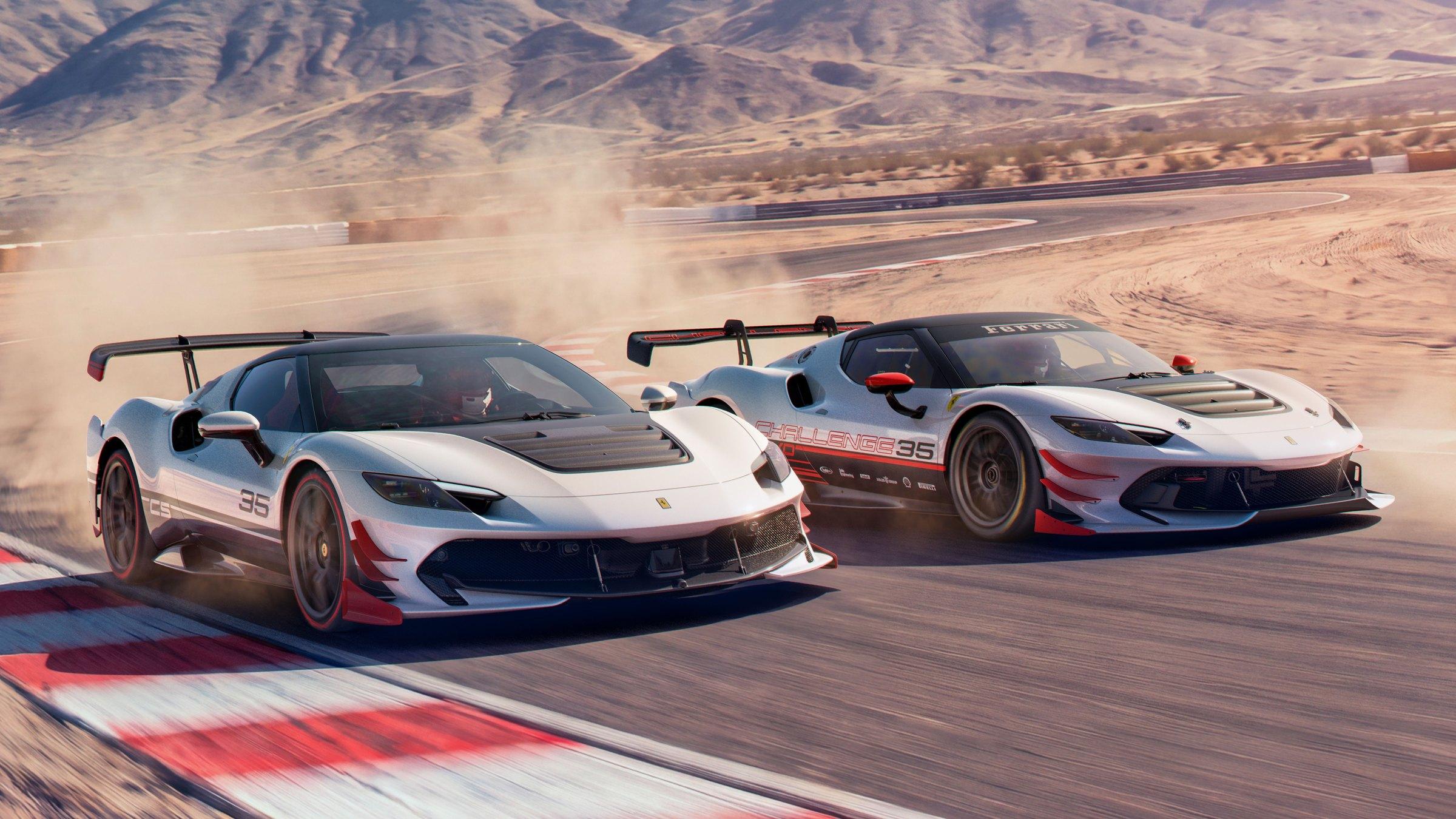
Ferrari unveiled the 296 Challenge Stradale on Saturday 21 November 2026 in Barcelona. With no electric motor, it weighs 140 kg less than the series-production coupé and targets the track with 617 kg of downforce.
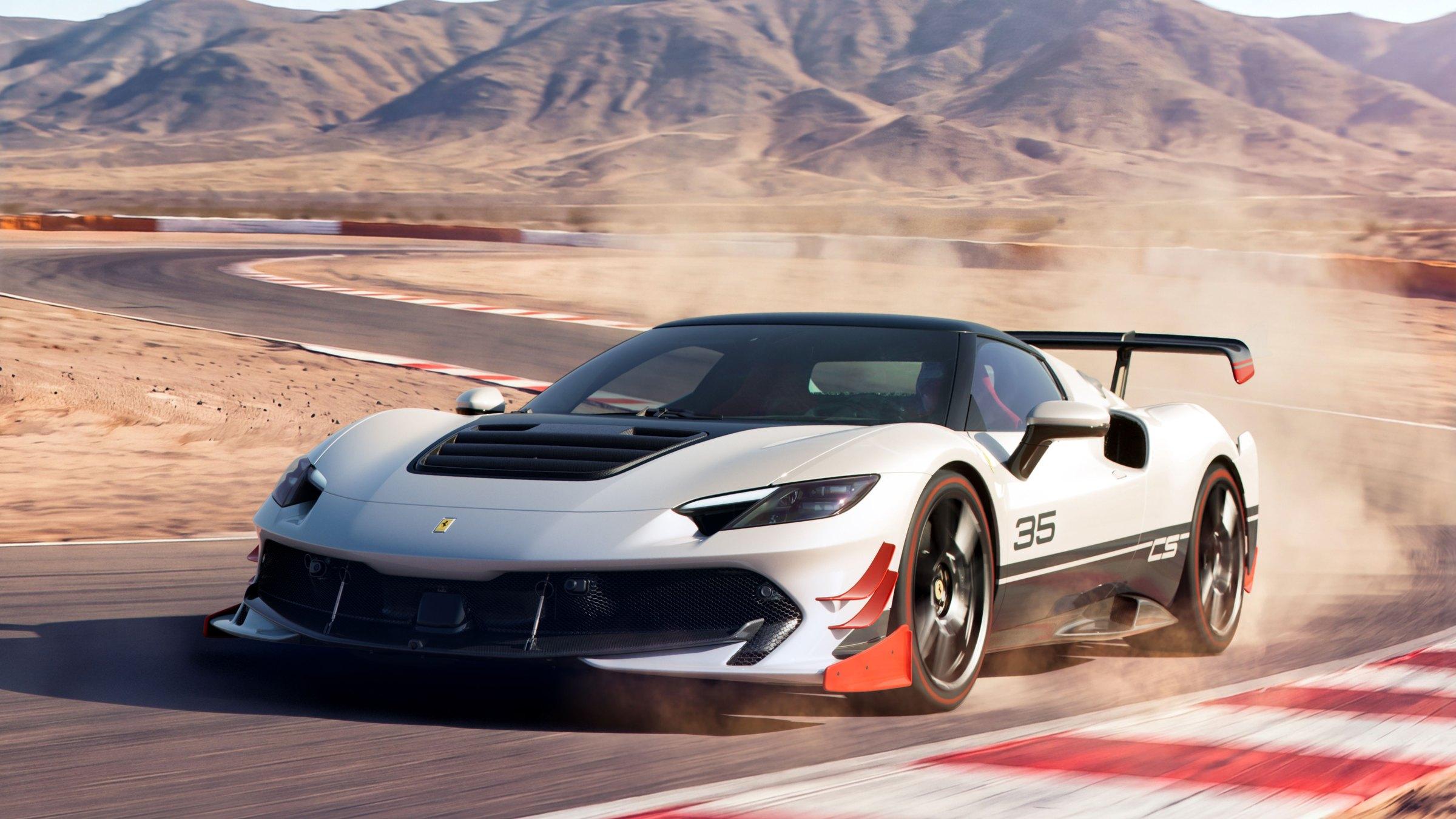
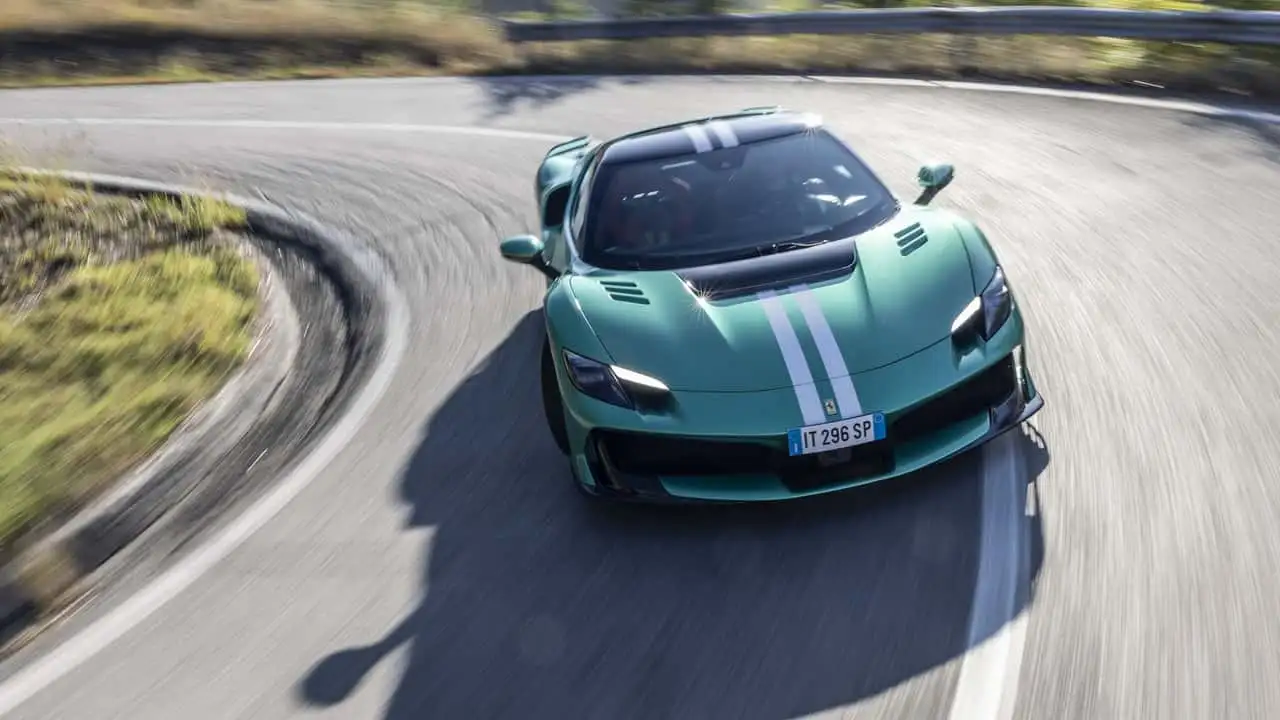
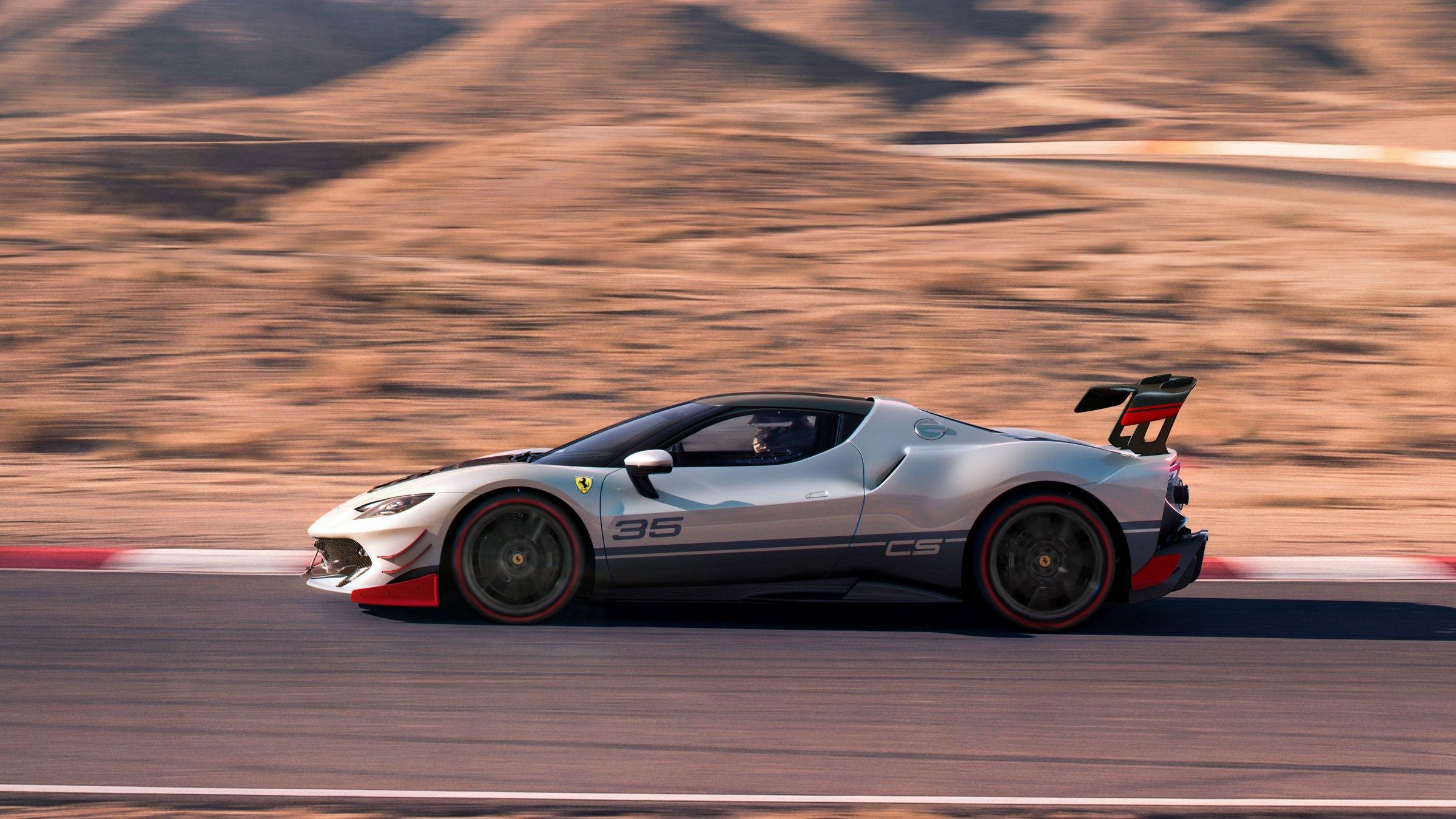
Ferrari unveiled the 296 Challenge Stradale on the evening of Saturday 21 November 2026 at the Circuit de Barcelona-Catalunya in Montmeló. The brand presented it during the Finali Mondiali, the main end-of-season event of its customer racing series, alongside the 296 Challenge Evo, the new car for its one-make championship. The Stradale, for its part, is road-legal. It is the most track-focused version of the brand's hybrid V6 coupé, but without its electric components.
Ferrari removed the electric motor to save weight. The result is 1,330 kg dry with options, 140 kg less than the series-production hybrid coupé and, according to Ferrari, the same weight as the race car. The twin-turbo V6 works alone and delivers 670 hp, compared with 830 hp for the hybrid coupé. That works out at 1.98 kg per horsepower.
- without electric assistance
- 670hp
- dry, with options
- 1,330kg
- of downforce at 250 km/h
- 617kg
- from 0 to 100 km/h
- 2.8s
Figures stated by Ferrari.
Why did Ferrari remove the hybrid system?
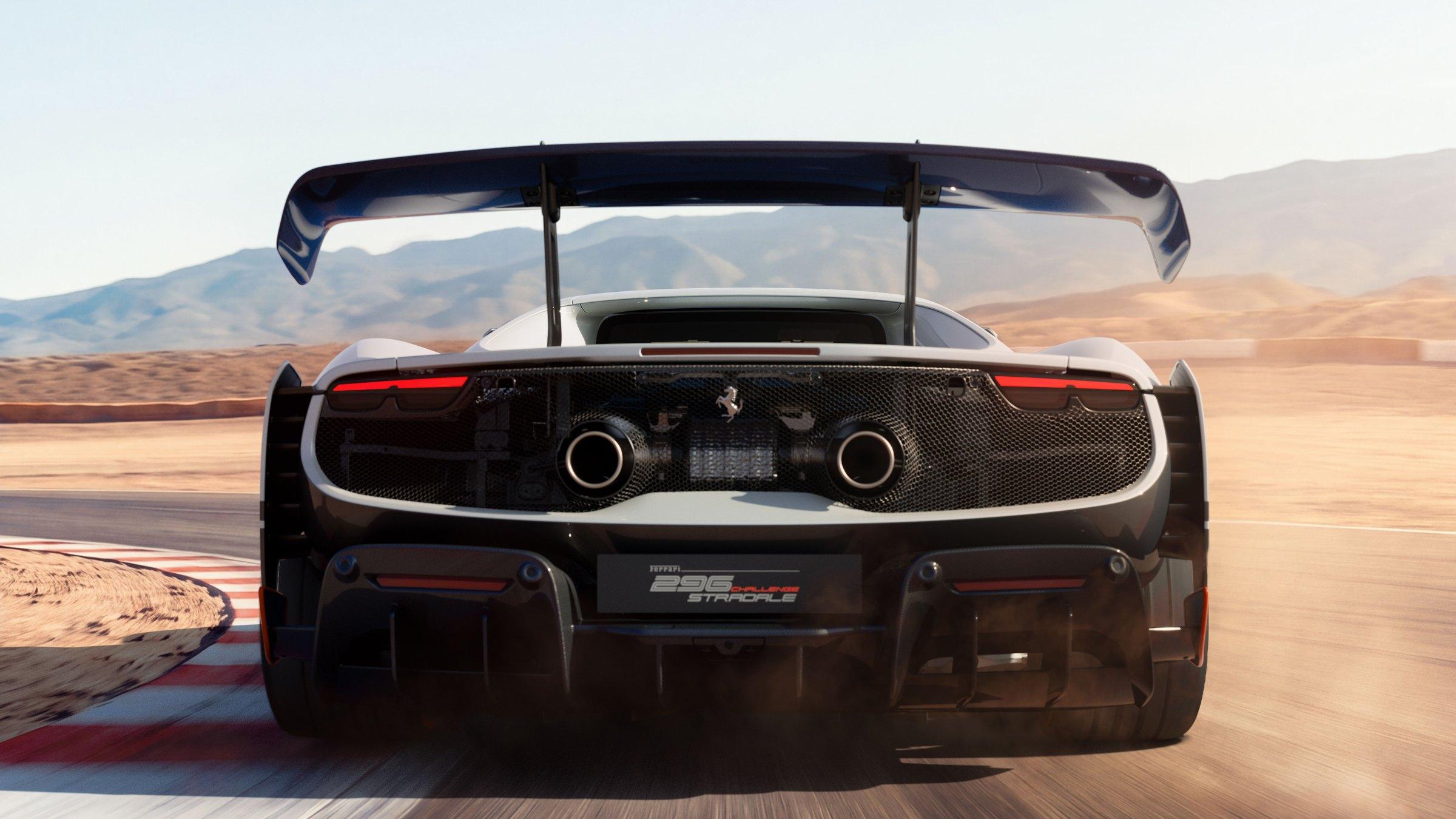
On the series-production coupé, the hybrid system adds 167 hp through an electric motor and a 7.45 kWh battery. It also adds weight and complexity. Ferrari therefore removed it entirely, as on the 296 GT3 race car. To keep a starter and air conditioning without the electric side, the brand developed a belt-driven starter generator, which Ferrari describes as a first for one of its road cars, and a mechanical air-conditioning compressor. The driveline has also been revised, with a lighter flexplate between the engine and the gearbox.
Until the 296 Challenge Stradale arrives, discover a car you can already drive with Turismo.
What does the spec sheet say?
The engine is a twin-turbo V6 with a 120° vee angle that revs to 8,500 rpm. It sends its power to the rear wheels through an 8-speed dual-clutch gearbox. Under full load, a gear change takes about 170 milliseconds, as in a race car, and about 250 milliseconds in calmer driving. The main figures:
- 120° twin-turbo V6, 2,992 cc, no electric motor
- 670 hp at 8,000 rpm and 740 Nm at 6,250 rpm
- 1,330 kg dry with options, with 41.5% over the front axle and 58.5% over the rear
- 0 to 100 km/h in 2.8 s and 0 to 200 km/h in 7.9 s
- Top speed above 300 km/h
- From 200 km/h to a standstill in 101 metres
It reaches 100 km/h as quickly as the most powerful member of the family, the 296 Speciale. Up to 200 km/h, however, it loses almost a second (7.9 s against 7.0 s), because it has no electric motor. It was not designed for straight-line figures, but for lap times on a circuit.
What do the aerodynamics change on track?
This is where the car changes most. At 250 km/h it generates 617 kg of downforce, 72% more than the series-production coupé according to Ferrari. The fixed wing alone provides 270 kg of that. The rest comes mainly from a fully enclosed flat underbody, a new front splitter and vortex generators. Ferrari also quotes 7% more grip, 34% more stability and 68% less body roll.
On its Fiorano test track, Ferrari quotes a lap time of 1 min 18.5 s, against 1 min 19 s for the 296 Speciale and 1 min 21 s for the series-production coupé. The car gets predictive slip control calibrated for track use, also a first for a road-going Ferrari, and the FIVE software taken from the F80, which continuously estimates the state of the car.
What changes in the cabin?
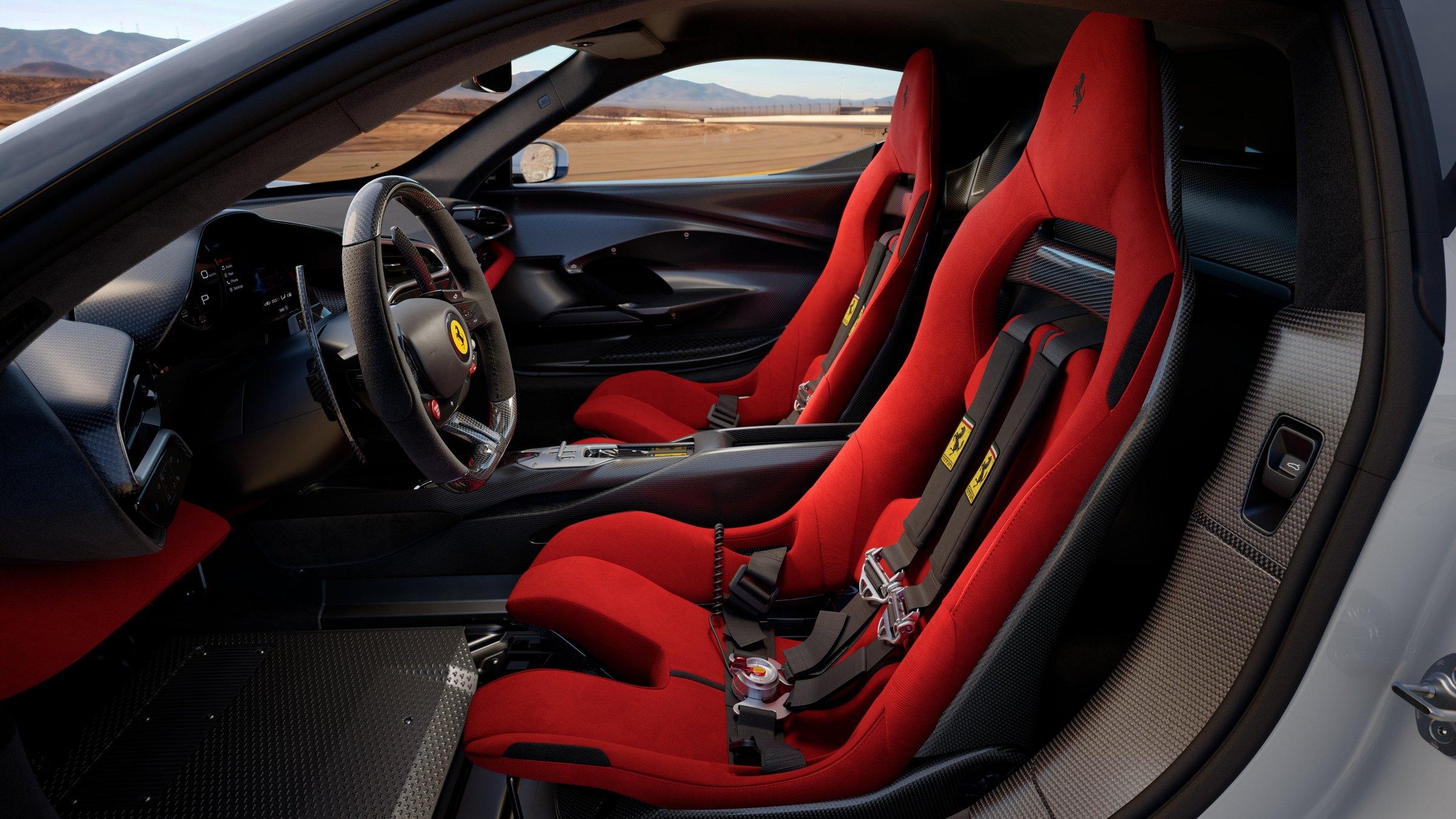
The seats are carbon-fibre buckets with a tubular structure, 25% lighter than conventional bucket seats. Ferrari also offers an option never before available on a production car. The trim under the seats, the lower carpets and the panelling under the console are removed, and part of the chassis remains visible. The other options to save weight or personalise the car:
- Forged wheels, about 11.9 kg less unsprung mass
- Carbon-fibre bonnet trim, 0.7 kg lighter
- A dedicated livery
- Track exhaust, fitted and removed by official dealers
How much does the 296 Challenge Stradale cost?
Ferrari has not published an official price. According to Motor1 Italia and Il Sole 24 Ore, it costs 291,000 euros, 1,000 euros less than the series-production hybrid coupé. Neither outlet says whether this price includes VAT or which country it applies to.
Ferrari has not yet given the date of the first deliveries or the number of cars to be built. The brand lists the Stradale in its regular range, not among its special series, but has not said whether production will be limited.
Not in our catalogue yet
Would you like to drive a Ferrari 296 Challenge Stradale with Turismo?
Your answer is anonymous and helps us choose our next cars.
Where does the Challenge Stradale name come from?
The name refers back to the 360 Challenge Stradale of 2003, which brought the spirit of the one-make championship to the road. The track-focused versions that followed took other names: 430 Scuderia in 2007, 458 Speciale in 2013, then 488 Pista in 2018. The 296 Challenge race car, presented on 28 October 2023 at Mugello, was the championship's first car with a V6 engine.
- 2003360 Challenge Stradale
- 2007430 Scuderia
- 2013458 Speciale
- 2018488 Pista
- 21 November 2026296 Challenge Stradale unveiled
- 2027The 296 Challenge Evo goes racing
Which cars does it compete with?
Its direct rivals are road-going sports cars with a strong track focus. Each brand measures weight in its own way, so the figures cannot be compared to the exact kilo.
- McLaren 750S: 750 hp, 1,277 kg dry in its lightest version, 0 to 100 km/h in 2.8 s
- Porsche's GT3 RS, 992.1 generation (2022): 525 hp and 860 kg of downforce at 285 km/h
- The 296 Speciale: 880 hp with the hybrid system and 435 kg of downforce at 250 km/h
Can you drive a Ferrari with Turismo?
Yes, in Luxembourg and Belgium. Turismo offers the series-production hybrid coupé by subscription, in Assetto Fiorano specification and with its 830 hp. Our guide explains what the monthly payment covers.
Our verdict
The 296 Challenge Stradale does the opposite of what is often seen: less power, less weight and much more downforce. On paper, it laps faster than the 296 Speciale, which has 210 hp more. It is aimed at drivers who use circuits and are also considering a GT3 RS, the most radical version of the GT3 covered in our guide to the Porsche 911. The official price and the number of cars built have yet to be announced.
Key points
- Unveiled on 21 November 2026 in Montmeló, near Barcelona
- No electric motor: 670 hp for 1,330 kg dry
- 617 kg of downforce at 250 km/h, helped by a fixed wing
- Fiorano lap in 1 min 18.5 s, according to Ferrari
- 291,000 euros according to Motor1 Italia, with no official price from Ferrari
- At Turismo: the series-production hybrid coupé, by subscription in Luxembourg and Belgium
FAQ: Ferrari 296 Challenge Stradale
How powerful is the Ferrari 296 Challenge Stradale?
Its 2,992 cc twin-turbo V6 delivers 670 hp with no electric assistance, for a dry weight of 1,330 kg with options.
Why is the 296 Challenge Stradale not a hybrid?
To save weight. Without an electric motor or battery, it weighs 140 kg less than the 296 GTB.
How much does the 296 Challenge Stradale cost?
Ferrari has not given a price. Motor1 Italia and Il Sole 24 Ore report 291,000 euros, without saying whether VAT is included.
When will it be delivered?
Ferrari has not yet given a delivery date or a production volume.
Can you drive a Ferrari with Turismo?
Yes. In Luxembourg and Belgium, Turismo offers the 296 GTB Assetto Fiorano, with 830 hp, by subscription.